Money Matters: Exploring Young Adults’ Financial Literacy
In today’s world, financial literacy has become an essential life skill. It is the ability to understand and manage financial matters effectively. Be Strong International’s Project H.O.P.E program aims to educate teens and young adults about the importance of financial literacy and provide them with the necessary tools to become financially capable. In this article, we will explore the various aspects of financial literacy and how Project H.O.P.E can help young adults become financially responsible.
What is Financial Literacy?
Financial literacy is the knowledge and skills required to make informed and effective decisions regarding financial matters. It involves understanding personal finance, financial planning, budgeting, and managing financial risks. It is the foundation for financial success and a secure future.
Why is Financial Literacy Important?
Financial literacy is essential to making informed decisions about earning, spending, saving, and investing money. It helps individuals avoid financial mistakes, such as excessive debt, high-interest loans, and inadequate savings. It also enables them to make better choices about career paths and financial goals. Financially literate individuals are more likely to achieve financial stability and long-term wealth.
What Does Project H.O.P.E Offer?
Project H.O.P.E is an interactive workshop series that guides and empowers young adults on heart skills, healthy relationships, character development, careers, and financial literacy. The program helps young adults develop financial capability through financial education, building financial capability, and financial management. Here are some of the courses covered by Project H.O.P.E:
- Financial Literacy Course:
The program offers a comprehensive financial literacy course that covers the basics of personal finance, including budgeting, credit, and debt management. - Wealth Management:
The program helps young adults learn about the importance of building wealth and managing it effectively. It covers topics such as investments, retirement planning, and estate planning. - Money Management:
Project H.O.P.E provides practical advice on how to manage money effectively, including tips on saving, budgeting, and reducing expenses. - Financial Advisor:
The program offers young adults access to financial advisors who can help them develop personalized financial plans and provide guidance on financial matters. - Additional Courses:
Project H.O.P.E also provides supplementary courses on subjects such as financial planning, effective communication, and career and educational success.
Best Money Saving Tips for Young Adults:
Be Strong’s Project H.O.P.E. program provides young adults with the best money-saving tips. The program teaches young adults the importance of budgeting, saving money, and investing for the future. It provides tips on how to reduce expenses, avoid debt, and plan for their future. By following these tips, young adults can manage their finances effectively and avoid financial problems in the future. Here are some helpful questions and tips on financial literacy:
- What are the 4 main areas of financial literacy?
The four main areas of financial literacy are budgeting, saving and investing, credit and debt management, and financial planning. - What is the 50-30-20 rule?
The 50-30-20 rule is a budgeting rule that suggests allocating 50% of income to needs, 30% to wants, and 20% to savings. - What are the 5 components of financial literacy?
The five components of financial literacy are financial knowledge, skills, attitudes, behaviors, and values. - What is the 10-20-30 rule money?
The 10 20 30 rule is a budgeting rule that suggests allocating 10% of income to savings, 20% to debt repayment, and 30% to wants. - How can I improve my financial skills?
You can improve your financial skills by taking a financial literacy course, reading financial books and articles, and seeking advice from financial experts. - What is the difference between financial literacy and financial education?
Financial literacy is the ability to understand and manage financial matters, while financial education refers to the process of teaching financial literacy. - How money matters in our life?
Money plays a vital role in our lives as it affects our daily needs, wants, and goals. Financial stability and security can help reduce stress and improve our overall well-being.
Sign up for more information on Project H.O.P.E and receive educational material here.
Have questions? Contact us here.
In today’s society, it is essential for the youth to develop a strong character to succeed in life. A strong character can lead to healthy relationships, success in careers and education, and financial literacy. Be Strong’s Project H.O.P.E. is a program that focuses on healthy outcomes through prevention education. The program offers workshops that guide and empower teens and young adults in character development, healthy relationships, careers, and financial literacy. In this blog, we will explore the importance of character development in youth and how Be Strong’s Project H.O.P.E. can help.
Why character development is important:
Character development is crucial for the youth as it shapes their personality, behavior, and values. Developing positive traits such as honesty, respect, responsibility, and empathy can lead to success in various aspects of life. Positive character traits can also help youth overcome challenges and make informed decisions in difficult situations. Character development helps youth build self-esteem, confidence, and resilience, enabling them to face the world with a positive attitude.
Characteristics of 21st century youth:
The 21st century has brought about significant changes in society, including advancements in technology and globalization. The youth of this era are exposed to a wide range of opportunities and challenges, which require them to possess specific characteristics. Some of the positive characteristics of 21st century youth include adaptability, creativity, critical thinking, communication skills, and emotional intelligence. However, negative characteristics such as impulsiveness, addiction, and lack of empathy are also prevalent. Developing positive characteristics can lead to personal and societal growth, while negative traits can lead to destructive behavior.
What are the benefits of character development in youth?
Character development in youth can lead to a range of benefits, including:
- Improved decision-making skills
- Increased self-esteem and self-confidence
- Greater empathy and respect for others
- More positive relationships with peers, family, and authority figures
- Higher levels of academic and career success
How Be Strong’s Project H.O.P.E. helps:
Be Strong’s Project H.O.P.E. offers workshops that focus on heart skills, character development, healthy relationships, career development, and financial literacy. The program deals with real-life situations, offering honest yet hopeful guidance for youth. The workshops are interactive and can be used by public and private schools, churches, and community organizations. Be Strong’s Project H.O.P.E. has served 25 middle and high schools in Miami-Dade and Broward Counties.
Character development among youth is crucial for building a healthy and successful society. Be Strong’s Project H.O.P.E is making a difference by providing young people with the skills they need to succeed in all areas of their lives.
If you are interested in learning more about the program or supporting its mission, visit the Be Strong International today.
Your teenager has returned to school after the summer vacation. At the beginning of the new school year, your teen may experience feelings of excitement or anxiety. However, you can make the most of this time by laying the groundwork for your teen’s academic success. As a parent, it is important that our teens be confident in themselves. As teens go through self-discovery and search for their place in the world, many encounter circumstances that test their self-beliefs. In this article, we will discuss ways to build self-confidence in your teenager and prepare them at the start of the school year.
Building Confidence and Self-Esteem
Children who were confident as kids may lose it as teens. Adolescence is often a time of self-doubt, poor body image, and insecurity for many. Good news: You can help improve low self-esteem in teenager, which in turn will benefit them in many other ways. Confident teens can handle peer pressure, navigate dating relationships, make good decisions, and recover from setbacks. Here are a few ways to help build confidence and self-esteem in your teenagers:
● Show unconditional love
When we condition our love on our teen’s actions, we diminish the power of unconditional love and undermine the belief that they are worthy of our affection regardless of their behavior. Assure your adolescent that your affection for them is unconditional and unrelated to how well they achieve in school, the company they keep, where they attend university, etc.
● Build confidence at home
A fixed attitude prevents many adolescents from expanding their sense of who they are and what they are capable of. Even though your kid seems to be rejecting the idea of improvement, there is always space for development. Discuss how the human brain is continually developing and expanding. Write down some thoughts on areas in which you’ve observed your adolescent develop. This will help with building self-esteem in teens and start building their confidence.
● Make room for failure
A teen’s sense of self-worth can be directly tied to how their parents respond to the inevitable failures and setbacks they will eventually face. Criticizing, overreacting, or ignoring it will only convey a message that there is no room for growth as a result of their experiences. Stop worrying so much and talk to your teen about it. Teens are capable of overcoming challenges if they see them as opportunities for growth.
● Develop new skills or interests
Although your teen’s brain is developing rapidly at this time, you may notice that they are having more difficulty in some areas than they were before. Insist that your teen perceive each difficulty or area of worry as a chance to develop new skills and broaden their horizons. Build on your teen’s interests to help them discover new skills.
● Don’t let them give up
Teenagers may not always need to feel confident before embarking on anything new or difficult. If they commit fully to anything, they embrace a growth attitude and can gain confidence along the way.
● Give reassurance
Teen’s often experience difficulties as they begin to transition into adulthood, but this does not make them bad people. You should reassure your teen that they are not bad for choosing an activity over having a romantic partner or ending bad friendships. Building self-esteem and confidence often means taking bold stands.
● Create a safe space
If you want your teen to feel secure and confident, you should provide them with a safe environment in which to do so. Imagine different scenarios and act them out, varying your responses, voice volume, tone, and any nonverbal cues you use. When teaching teens self-esteem, those who struggle to communicate clearly, they can benefit from having a safe space to do so at home.
● Encourage self-compassion
Encourage your adolescent to practice self-compassion if they are unable to break free from a negative or limiting mindset regarding their worth. To cultivate a healthy growth mindset, we must be kind and patient with ourselves as we continue to learn and grow. Have them install apps that promote mindfulness, come up with uplifting mantras, or write positive affirmations down in a place where they will see them frequently.
● Explore different activities or interests
Teenagers who do a lot of different things, like sports, clubs, volunteering, and schoolwork, tend to feel better about themselves. They don’t let a setback in one area bring them down because they have other things that make them feel good about themselves. As a parent, if you continue to be supportive, reassuring, and optimistic, your teen will feel confident and capable in themselves.
● Listen
To be empathic, you don’t need to agree with your teen. Do not judge, assume, or leap to conclusions. Focus on listening rather than being correct or having the last word as a parent. Listening builds self-esteem and self-worth in teens.
● Model confidence
If your adolescent is watching you, they’re observing how you handle tough situations and how you feel about yourself. Consider your self-esteem and confidence, and be objective. Adopt a healthy mentality and seek experiences and activities that build your self-confidence.
Tips to Prepare for School
Keeping your teen interested in school and extracurricular activities can be accomplished by maintaining an active, but not overbearing, relationship with them Now, let’s examine some back-to-school tips and tricks that will help you and your teen transition into the new school year.
1. Prepare teen for school
Back-to-school preparation should begin at home, and parents can help their teen get off to a strong start by incorporating various back-to-school strategies and practices into their family’s regular activities. Breakfast, sleep, and limiting screen time are three ways that you can assist them in tackling the day without interfering with their increasing level of independence.
2. Help them become more organized
As any parent who has had to clean their child’s room can attest, no one is born with exceptional organizational skills. The ability to organize one’s life can lead to greater success in middle and high school, which can serve as the foundation for future success.
3. Prepare them for academic success
When you have more classes, there is also more material to study and more work to complete. Keeping on top of their homework can help students maintain control over other aspects of their lives. Every school night, adolescents may have assignments that take several hours to complete. Providing assistance to them in the management of their workload can go a long way toward assisting them in the organization of their lives.
4. Promote extracurricular activities
It is beneficial to a teen’s sense of belonging when they participate in extracurricular activities outside of the classroom, such as theater club, art club, or playing a sport. Teamwork and a sense of belonging are two important building blocks for self-confidence, and encouraging participation in organized school activities can help students develop both.
Be Strong International
Ensure that your teen is confident and prepared for a successful school year. Maintain close contact with your teen while also giving them the independence they require to grow into unique and strong individuals. As mentioned in our list above, boosting teenage self-esteem with activities is a great way to start. Be Strong International, for example, is an organization that helps teens navigate all areas of their lives.
Be Strong International is a non-profit organization based in Miami-Dade County with the mission of guiding individuals and families from brokenness to wholeness by providing educational services and resources to assist them in developing and maintaining healthy relationships. They are dedicated to assisting teenagers in becoming strong and thriving individuals in school and in life.
Their Project H.O.P.E. program assists teens and young adults in making better decisions about their relationships, character, careers, and finances. These interactive workshops are intended to guide and empower young people from public and private schools, churches, and community organizations. Every kid is welcome! This program addresses difficult topics and deals with real-life situations. The Project H.O.P.E. staff fosters an educational environment that is open, honest, realistic, and evidence-based. For more information about Project H.O.P.E, click here.
Their “After-School Club” program aims to guide middle school aged children by integrating holistic enrichment activities such as arts and academic support, as well as a unique curriculum that meets their social, emotional, mental, spiritual, and physical needs. For more information about the Be Strong After School Club, click here.
The “Girls Empowerment Mastery Sessions” (GEMS) program at Be Strong aims to provide teen girls with the tools they need to “find their voice” in all aspects of life, including social, emotional, mental, and physical dimensions. According to research, it is quite common for girls approaching adolescence to experience what is known as “loss of voice.” This is defined as the inability to fully express or value one’s own thoughts and feelings. This program will help her discover her own voice and building confidence in your teenager. For more information about the Girls Empowerment Mastery Sessions, click here.
If you have any questions feel free to reach out to us through our Contact Us page or write to us on the Chat Box located on the bottom right corner of this website.
It’s a great thing when people want to make a difference in their communities. Whether you live in South Florida or are new to the community, having an interest in its well-being and the lives of the fellow residents can be an amazing experience. It will enrich your life, familiarize you with your community, and connect you to people and ideas that can positively impact your perspective for the rest of your life.
Additionally, helping your community is an opportunity for you to grow as a person, and to better understand how you fit into the world around you. Furthermore, in South Florida, there are many ways you can make a difference in the community. You can shop locally, volunteer your time, donate (clothes, food, or money), become a mentor, etc. The list is endless but find a cause you are passionate about.
For instance, helping the people in the community.
Helping the People in Your Community
Without a doubt, volunteering is a wonderful opportunity to help the people in your community. Volunteers play an integral part in the community. Without volunteers, many of the services and events that we need and enjoy in our communities would not be so readily available. Giving back to the place you call home helps to unite the community and bridge some of the social, economic, and political gaps.
Your South Florida community is made up of many different families; some of whom need support. These families face challenges such as homelessness, poverty, behavioral problems with youth, and family problems such as; single-parent homes, parenting issues, child neglect, and abuse. Reaching out and volunteering your time and resources (food, clothes, money) to community organizations and/or services geared towards helping those in situations such as these go a long way to making a difference in their lives.
An organization that’s spearheading the cause of bettering the lives of South Florida families and youth is Be Strong International. Be Strong is a non-profit organization which provides services and resources to build healthy parent-child relationships and go from brokenness to wholeness.
Let’s talk about the broken families in South Florida communities and how you can make a difference in their lives.
From Brokenness to Wholeness
Volunteering provides a great way to get to know your community and its citizens. Additionally, it will help you to better understand the circumstances of other members of your community. Having a broad, open-minded perspective of the different walks of life around you will help you to be an effective and empathetic citizen.
There are people and youth in South Florida who come from broken families –– divorced parents, single parents. This is a social issue that has too often been ignored in the communities and unfortunately creates generational patterns. Parents and children of broken families often experience financial and economic hardships, mental health issues, lack of educational resources, marital issues, etc.
According to a report by the Heritage Foundation, broken families tend to earn less and experience lower levels of educational achievement. Consequently, they pass the prospect of meager incomes and family instability on to their children, ensuring a continuing if not expanding cycle of economic distress. Fortunately, the federal government and states and local communities can play important roles in changing this culture to ensure that all children reach their full income potential.
This is where you can begin to make a difference. Donating your time to support those around you is extremely beneficial, both for you and your community. It has been statistically proven that people who volunteer regularly are healthier both physically and mentally.
Helping organizations within your community that support these broken families –– becoming a mentor, volunteering your time, donating money, food, and clothes –– can change the economic trajectory and future of these families. Going from brokenness to wholeness.
Be Strong International
There are so many important causes out there that always need volunteers to support the work they’re doing. As mentioned previously, Be Strong International is a non-profit organization that’s on mission to help South Florida parents and youth go from brokenness to wholeness –– And you can be a part of it.
Be Strong offers resources to help parents and youth develop and maintain healthy relationships with each other and with those they interact with outside the family. They have Parent education programs and marriage workshops for couples. Teens and adolescents can participate in fun groups that focus on character development, healthy peer relationships, and other topics of concern.
Be Strong has served 230,000 South Florida community members, students, and parents, including:
- 5,175 parents trained annually on healthy communication
- 7,684 middle and high school students taught in 2020/2021
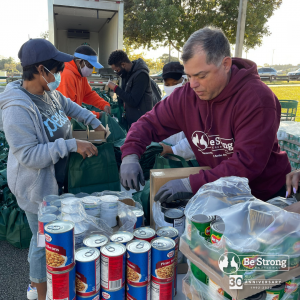
- 5,000 families fed through the Be Strong & Project P.E.A.C.E monthly food drive
Be Strong’s holistic educational services follow the principles established by education pioneer Maria Montessori, who believed that learning is affected by emotions and social relationships. Students learn most effectively when their whole self is considered – from their physical health to their emotional stability. A child who’s hungry or whose home life is unstable cannot learn as effectively as one whose basic needs are being met. They must also trust their teacher. It’s this holistic perspective that is the foundation of Be Strong’s programs.
Be Strong’s programs include:
Project H.O.P.E.
Most teens and young adults want to make the right choice when faced with temptations like drugs and risky sexual behavior, but they don’t know how. Project H.O.P.E. is an interactive workshop that helps them make the right decisions. Middle and high school students learn to make informed decisions about healthy relationships, character development, careers, and financial literacy. The program uses real-life situations to better prepare participants for facing them when they come up.
Marriage Matters
It really is possible to have an easy marriage if both partners respect each other and communicate in a healthy, positive manner. Marriage Matters helps couples learn to do just that with relationship counseling and marriage seminars that aim to resolve or prevent marriage problems. Marriage is about giving to each other. When couples focus on this principle, all other aspects tend to emerge or improve marriage relationships.
Raising the B.A.R. Parenting Alliance
Raising the B.A.R. is a parenting education program for caregivers that teaches evidence-based strategies for raising happy, healthy children. It’s offered through The Children’s Trust, which supports programs that improve the lives of children and families. The program helps families develop and maintain healthy relationships. Topics include:
- Positive Parenting
- Raising Confident, Competent Children;
- Raising Resilient Children;
- Raising Responsible Teenagers;
- Raising Competent Teenagers,
- and Getting Teenagers Connected.
How You Can Help Be Strong
Here’s how you can help Be Strong and make a difference in your South Florida community. Be Strong has two great ways you can help bring South Florida families from brokenness to wholeness:
Donate
Help Be Strong reach its goal of raising $300,000 in its 30th year. Click here to make a one-time or recurring gift.
Volunteer
Even if you only donate a few hours of time each month, you will be making a huge difference in the lives of your community members who are in need. Click here to Volunteer!
Volunteers are needed to:
- Assist during community events (e.g., handing out food boxes).
- Prepare care packages.
- Register candidates for sessions.
- Help with other areas.
For more information on joining Be Strong’s amazing Volunteer Team, contact the Volunteer Coordinator directly at 305-969-7829.